Preparing Subsea Operations
Subsea operations often involve limited time schedules, complex equipment, and limited room for error. Traditionally, much of the learning has taken place offshore, where vessel time is costly, and conditions leave little room for trial and adjustment.
Preparation is now increasingly moving onshore. Simulation and remote operations allow teams to test procedures, build competence, and support execution in a more controlled environment.
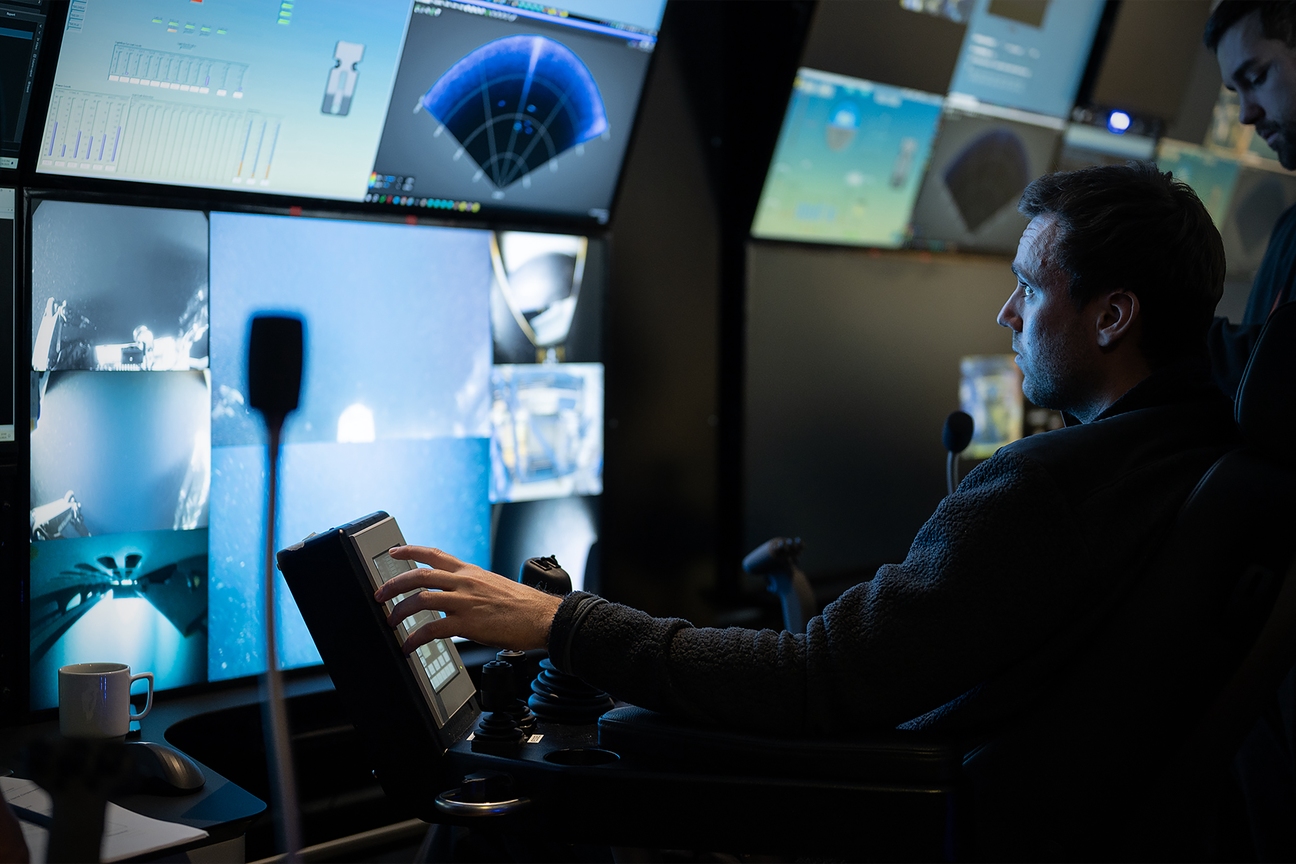
As part of this development, Omega Subsea is establishing a Remote Operations Centre (ROC) in Bergen, bringing training, planning, and operational support together in one integrated setup.
Simulating real operations
Simulation makes it possible to replicate subsea operations before they take place offshore.
“The simulator allows us to train realistic scenarios and understand how different parts of an operation interact. It creates a safe space where mistakes can be made and corrected before they have real consequences,” says Widme.
At the ROC, key activities can run step by step, including ROV deployment, tether management, subsea intervention tasks, crane operations, and coordination between vessel, ROV, and deck crew.
Running these scenarios in advance allows teams to identify bottlenecks, clarify roles, and align execution before mobilisation, and execution. For trainees and apprentices, this will provide early hands-on experience in a realistic setting. For experienced personnel, it offers a way to prepare and train for specific campaigns and intervention tasks
Supporting operations from shore
Remote operations extend this approach into live offshore work.
-In practice, expertise does not always need to be offshore to be effective. Support can be provided directly from shore while still maintaining full insight into the operation,” says Widme.
From the ROC, engineers and specialists can access live data, monitor vessel activity, and contribute directly to operational decisions. This can include following ROV operations in real time, assisting with troubleshooting, or evaluating system performance as work progresses.
This makes it possible to involve the right expertise without increasing offshore headcount, improving flexibility, reducing costs, and enabling faster response during operations.
Linking preparation and execution
Combining simulation and remote operations creates a closer connection between planning and execution.
Planned campaigns can be reviewed in advance, allowing teams to work through operations step by step, clarify responsibilities, and align on how work will be carried out. By the time operations begin offshore, key elements have already been considered and validated.
Located in Bergen, the Omega Subsea ROC is located close to engineering environments and infrastructure, making it accessible to both internal teams and external partners. This enables closer collaboration across disciplines and more efficient use of resources and competence across projects.
Developing competence over time
A structured training environment also supports long-term competence development.
Simulation makes it possible to follow how personnel progress from apprentice to experienced operator through repeated, scenario-based training. This helps build a consistent level of competence and prepares personnel for increasingly complex operations.
-It’s not only about initial training, but about developing people over time to be prepared for more complex operations,” says Widme.
The controlled environment also supports certification processes and trade testing, ensuring consistent standards across teams.
Preparation and execution are becoming more closely connected, with increased coordination between onshore and offshore teams.
For Omega Subsea, the development of the ROC supports this way of working, where planning, training, and operational support are integrated into day-to-day operations.